Córdoba
Über
Entdecken Sie die Geschichte von Córdoba
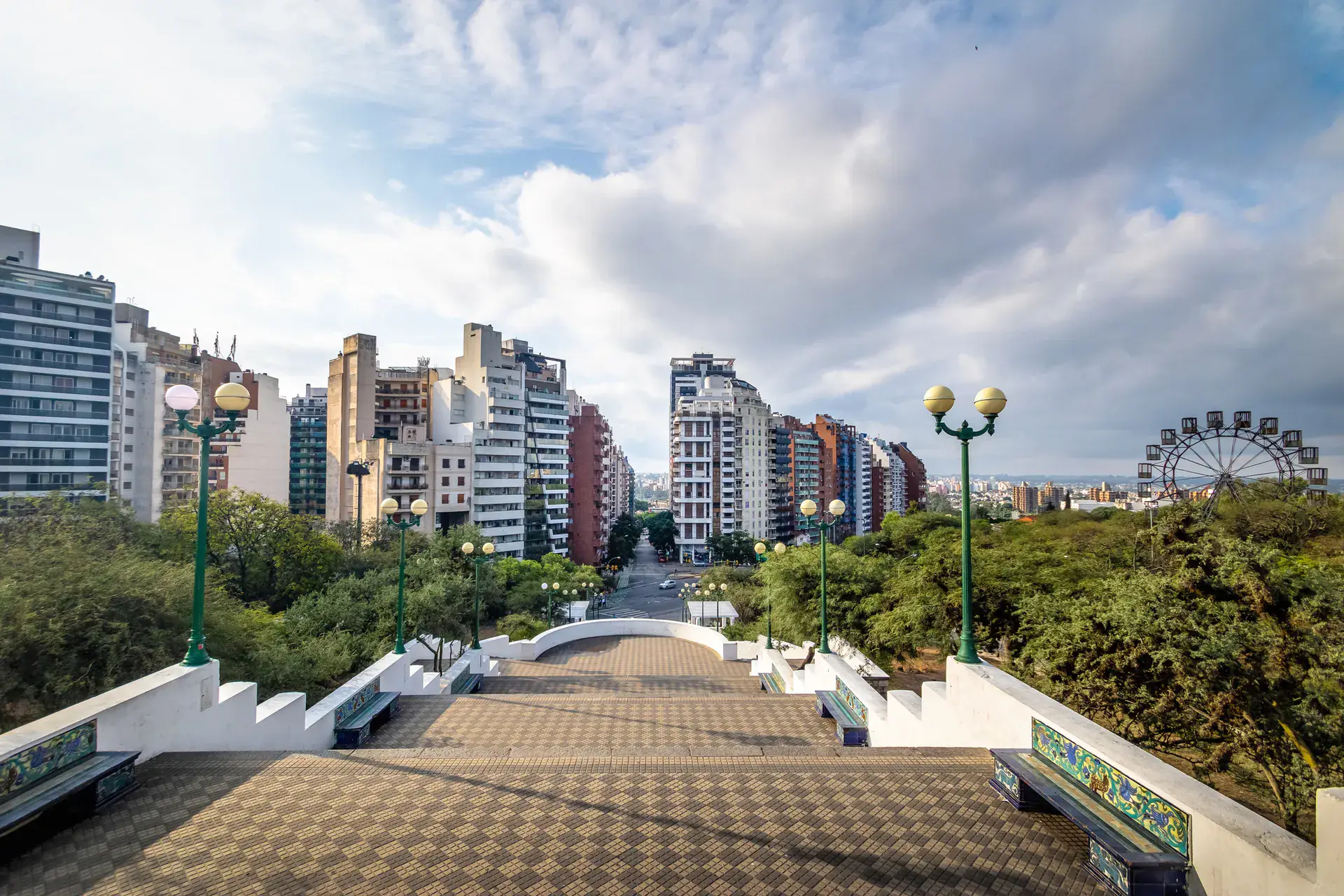
Córdoba is a student city in the middle of Argentina, set in a valley ringed by green hills. Its colonial heart fits into a few streets around Plaza San Martín, where the whitewashed arcades of the Cabildo de Córdoba face the square. The Jesuits founded the country's first university here, and their great cattle estates out in the countryside are UNESCO-listed and still open. The city is young and stays up late: the bars and galleries along the Paseo del Buen Pastor fill after dark, close to the Church of the Sacred Heart, neo-Gothic and famous for its missing tower. All around lie the sierras — a long walk leads up Cerro Uritorco, known for the lights people claim to see above it, and condors ride the updraughts over Quebrada del Condorito National Park. Sunday means asado over a wood fire, and cuarteto, the dance music born here, still packs halls until the small hours.
Reise-Score
Der Reise-Score im Jahresverlauf.
Januar
Sehr gutFebruar
GutMärz
GutApril
MäßigMai
UngünstigJuni
SchlechtJuli
SchlechtAugust
UngünstigSeptember
MäßigOktober
GutNovember
GutDezember
Sehr gutAktivitäten
Entdecken Sie die besten Attraktionen in Córdoba und Umgebung
Paseo del Buen Pastor
A former convent and women's prison turned cultural centre, its neo-Gothic chapel preserved and its fountains set dancing after dark. It marks the entrance to Nueva Córdoba, the student and bar district.
Church of the Sacred Heart (Capuchin Church)
This 1934 neo-Gothic church is the city's most photographed building, with one tower deliberately left unfinished as a reminder of human imperfection. Late afternoon light catches the façade best; it stands in the middle of Nueva Córdoba.
San Roque Lake Beach
The beaches on the San Roque reservoir at Villa Carlos Paz are the closest water to Córdoba — swimming, jet skis and pleasure boats in summer. Thirty-five kilometres by motorway, and crowded in January.
Cerro Uritorco
The highest peak of the Sierras Chicas at 1,979 metres, as famous for its UFO folklore as for the climb itself. Access is ticketed and controlled from Capilla del Monte, with last starts around midday.
Sarmiento Park
Laid out from 1889 by the French landscape architect Charles Thays, this is the city's green lung: some three hundred hectares with a rose garden and a lake where rowing boats are hired. It fills up on Sundays, when locals bring their maté.
Plaza San Martín
The central square since the city was founded in 1573, framed by the colonial Cabildo and the cathedral, with San Martín's equestrian statue at its centre. Free guided walks of the historic centre set off from here.
Einige Texte auf dieser Seite wurden mit KI erstellt und können Fehler enthalten. Bitte prüfen Sie wichtige Angaben.Fotos und Bewertungen von Google Maps