Santiago
Über
Entdecken Sie die Geschichte von Santiago
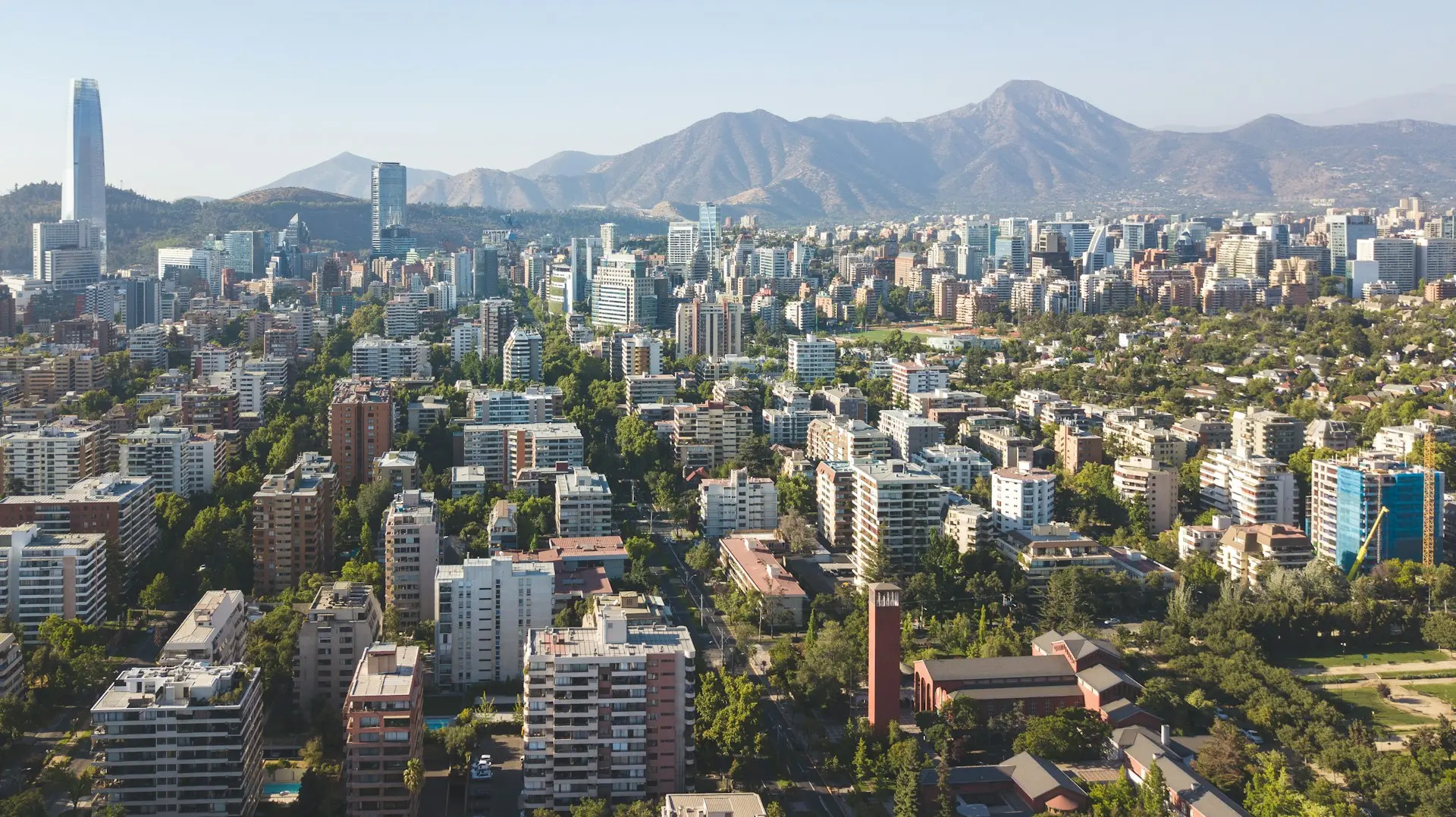
Santiago lives at the foot of the Andes, a wall of peaks closing off the end of the avenues. The city sits in a long valley with the Pacific on one side and the Maipo vineyards on the other, each less than two hours away. In the centre, Santa Lucía Hill raises its stone stairways and fountains on the rock where the city was founded in 1541. Around the Plaza de Armas de Santiago the street never quietens: chess players, barrel organs, ice-cream sellers. The Santiago Central Market serves conger eel and clams under an iron frame shipped from England, and the Chilean Museum of Pre-Columbian Art keeps textiles and ceramics from across the continent. The Cerro San Cristóbal funicular climbs to the stone Virgin standing three hundred metres above the rooftops. In the evening Patio Bellavista fills with terraces and pisco sour, a few steps from one of Pablo Neruda's houses.
Reise-Score
Der Reise-Score im Jahresverlauf.
Januar
Sehr gutFebruar
Sehr gutMärz
Sehr gutApril
UngünstigMai
SchlechtJuni
Sehr schlechtJuli
Sehr schlechtAugust
Sehr schlechtSeptember
Sehr schlechtOktober
UngünstigNovember
MäßigDezember
GutAktivitäten
Entdecken Sie die besten Attraktionen in Santiago und Umgebung
Sky Costanera
An observation level opened in 2015 on the 61st and 62nd floors of the Gran Torre Santiago, at 300 metres the tallest building in South America, giving a full turn of the horizon from the Andes to the coastal range. Access is through the Costanera Center mall, at Tobalaba metro station.
Parque Forestal
A ribbon of century-old plane trees laid out from 1905 on land reclaimed when the Mapocho river was channelled, running between Plaza Italia and the old Mapocho station. The Bellas Artes museum stands mid-park, and the German Fountain of 1912 marks the eastern end.
Patio Bellavista
An open-air courtyard complex in the Bellavista quarter, gathering dozens of restaurants, bars and craft shops between Pío Nono and Constitución streets since 2006. Entry is free and the patios serve late into the night; La Chascona, Neruda's Santiago house, is two blocks away.
Museum of Memory and Human Rights
Opened in 2010, the museum documents the dictatorship of 1973 to 1990 through testimony, photographs and objects, from the bombing of La Moneda to the 1988 plebiscite. Entry is free, it closes on Mondays, and Quinta Normal metro station is at its door.
Museo Nacional de Bellas Artes
Opened in 1910 for the centenary of independence in Emile Jéquier's neoclassical palace, under a glass roof made in Belgium, it shares the building with the contemporary art museum. Entry is free, it closes on Mondays, and it faces the Parque Forestal.
Chilean Museum of Pre-Columbian Art
Andean textiles, Mesoamerican ceramics and Rapa Nui carvings fill the former Royal Customs House of 1805, a block from the Plaza de Armas. The Chile before Chile gallery in the basement is the strongest section, and the museum closes on Mondays.
Einige Texte auf dieser Seite wurden mit KI erstellt und können Fehler enthalten. Bitte prüfen Sie wichtige Angaben.Fotos und Bewertungen von Google Maps