Thessaloniki
Über
Entdecken Sie die Geschichte von Thessaloniki
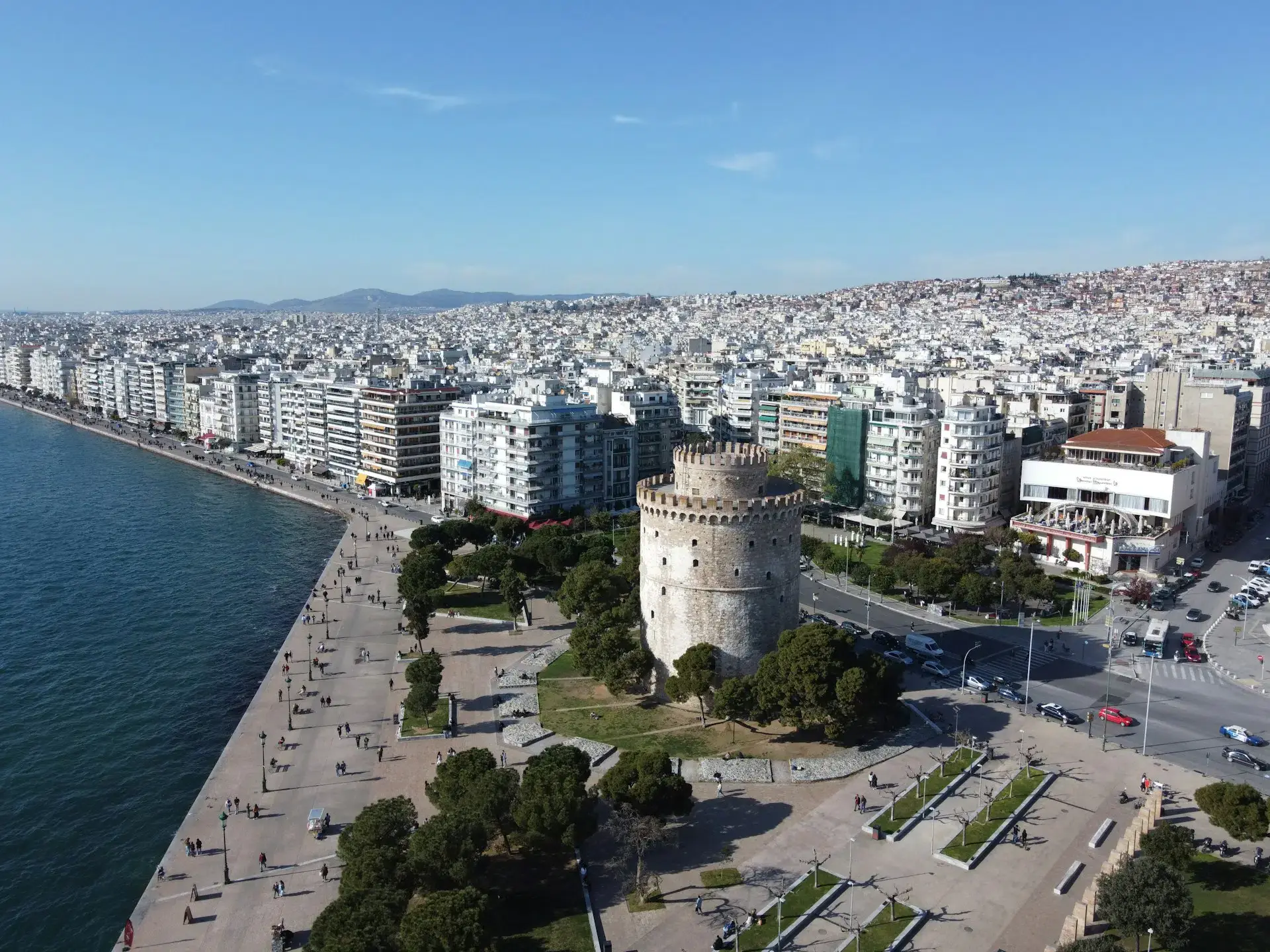
Thessaloniki lives facing the sea, and that is where the city gathers. The Thessaloniki Waterfront runs for kilometres, with benches turned to the gulf, cyclists and terraces open late. The White Tower of Thessaloniki stands at the end of it, round and stout, the last piece left of the harbour walls. Locals hold that the food here is the best in Greece: meze washed down with ouzo, sesame bread rings bought on a street corner, fish and spice stalls under the roof of the Modiano Market. Rome and Byzantium left their marks in the middle of town — the Arch of Galerius, the Rotunda of Galerius, the gold mosaics of the Church of Saint Demetrius. In the evening Aristotelous Square opens onto the water like a huge outdoor room. To the south Mount Olympus closes the horizon with its two thousand nine hundred metres, and the beaches of the Halkidiki Peninsula begin an hour away.
Reise-Score
Der Reise-Score im Jahresverlauf.
Januar
Sehr schlechtFebruar
Sehr schlechtMärz
Sehr schlechtApril
UngünstigMai
MäßigJuni
Sehr gutJuli
GutAugust
GutSeptember
Sehr gutOktober
GutNovember
SchlechtDezember
Sehr schlechtAktivitäten
Entdecken Sie die besten Attraktionen in Thessaloniki und Umgebung
White Tower of Thessaloniki
A 15th-century Ottoman tower long used as a prison, now the city's emblem, housing a museum across six levels linked by a spiral ramp. The rooftop terrace looks over the Thermaic Gulf and the seafront promenade.
Aristotelous Square
A broad square opening onto the sea, designed by French architect Ernest Hébrard in the reconstruction plan that followed the great fire of 1917. Its arcades hold the seafront cafés and host concerts and public gatherings.
Edessa Waterfalls
The Edesseos river drops 70 metres at the edge of Edessa's old town, with a path running behind the main fall and a fitted-out cave alongside. It lies about 90 km west, reachable by train from the central station.
Church of Saint Demetrius
The basilica of the city's patron saint, rebuilt after the 1917 fire, keeps six 7th-century mosaics and a crypt laid over Roman baths. The crypt is free to visit, down the stairs in the right-hand aisle.
Museum of the Royal Tombs of Aigai
The museum sits buried under the Vergina tumulus, built around the unlooted tomb of Philip II and his gold burial casket. It lies 75 km southwest and pairs with the palace of Aigai, reopened in 2024 two kilometres away.
Arch of Galerius
Raised around 299 to mark Emperor Galerius's victory over the Persians, the arch unrolls the campaign across four carved registers. It anchors the pedestrian avenue running straight up to the Rotunda.
Weitere Ziele, die Ihnen gefallen könnten
Vorschläge in der Nähe zum gleichen Thema
Einige Texte auf dieser Seite wurden mit KI erstellt und können Fehler enthalten. Bitte prüfen Sie wichtige Angaben.Fotos und Bewertungen von Google Maps