Catania
About
Discover the history of Catania
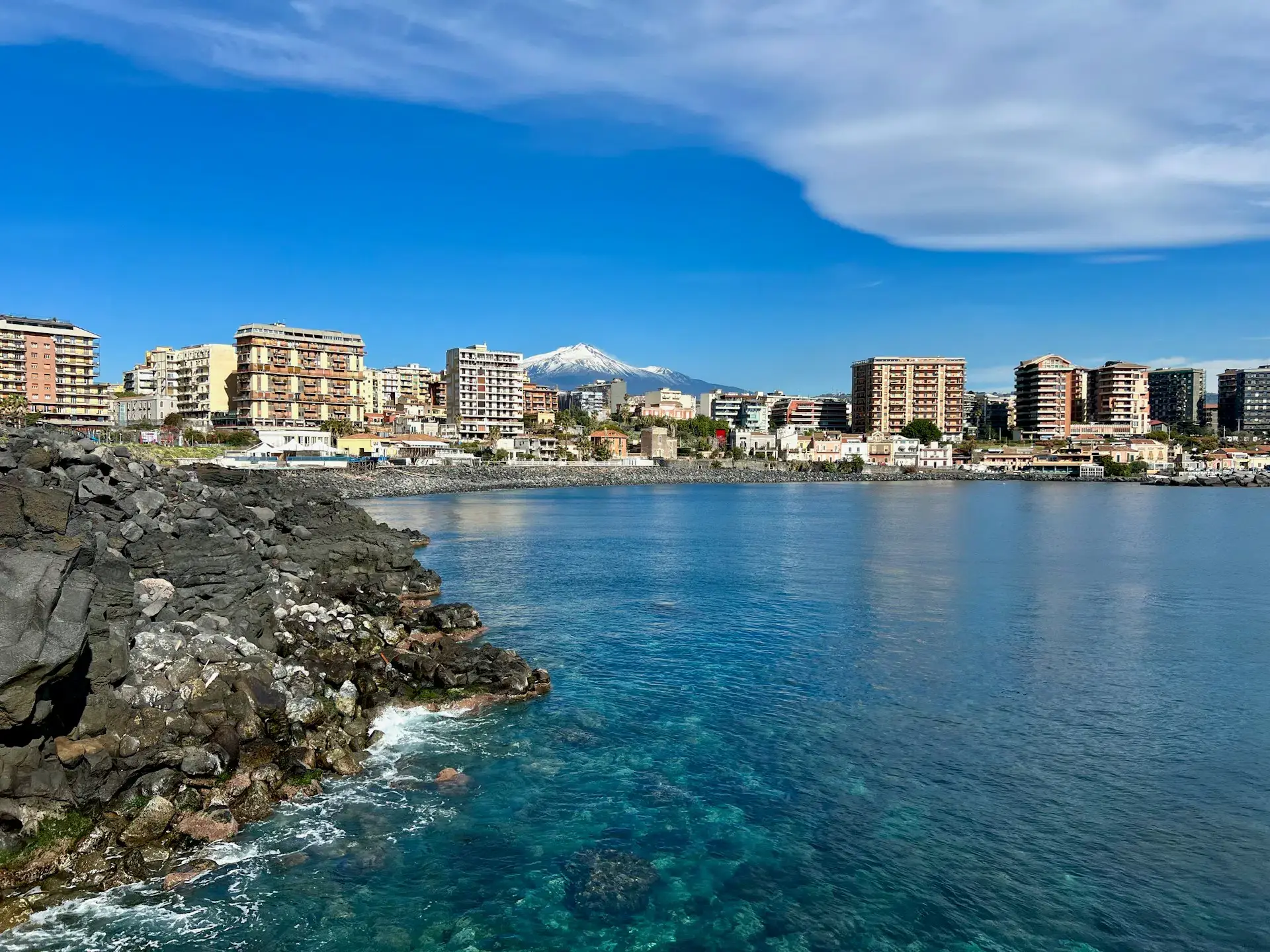
Catania lives at the foot of Etna, and the volcano never lets it forget: the city is built in black lava stone, and the summit smokes above the rooftops. Piazza del Duomo is the heart of it, pale baroque set against that dark background. The fish market is right beside it, and it is shouted rather than spoken. Food here means pasta with aubergine and salted ricotta, fried rice balls, and granita for breakfast with a brioche. Etna Park is under an hour away by road, and paths circle the Silvestri Craters over black ash that crunches underfoot. The sea is close too: the dark rocks and clear water of Isola Bella, below the Ancient Theatre of Taormina, where the volcano appears between the tiers of seats. Further south lie the lanes of the Island of Ortigia and the coves of the Vendicari Nature Reserve.
Travel score
The travel score throughout the year.
January
Very badFebruary
BadMarch
BadApril
PoorMay
GoodJune
ExcellentJuly
GoodAugust
GoodSeptember
ExcellentOctober
Very goodNovember
ModerateDecember
PoorThings to do
Discover the best attractions in Catania and its surroundings
Ancient Theatre of Taormina
The Greek theatre rebuilt by the Romans frames Etna and the bay of Naxos, the view that made its name. It hosts concerts and a summer festival, and on set-up days part of the tiers is closed.
Etna Park
The park covers the volcano's 1,200 km², from fresh lava flows to birch and chestnut woods. The tracks and huts on the north side, around Piano Provenzana, see far fewer people than the southern approach.
Island of Ortigia
Syracuse's historic core, joined to the mainland by three bridges, layers a temple of Athena turned cathedral with baroque façades. The morning market by the temple of Apollo is where to pick up lunch.
Silvestri Craters
Two craters opened by the 1892 eruption, beside the Rifugio Sapienza road at 1,900 metres, walked on loose black sand. This is the highest point you can drive to, and it runs ten degrees cooler than the coast, so bring a jacket.
Catania Cathedral
A cathedral rebuilt after the 1693 earthquake, its Vaccarini façade alternating white marble with black lava stone from Etna; it holds the relics of Saint Agatha and the tomb of the composer Bellini. The patron's festival in early February upsets the usual opening times; modest dress is expected.
Piazza del Duomo, Catania
The baroque square rebuilt after the 1693 earthquake, with the cathedral of Saint Agatha and the lava elephant that serves as the city's emblem. The fish market runs just behind it, Monday to Saturday mornings.
Other destinations you might like
Nearby picks in the same theme
Some of the text on this page is generated using AI and may contain inaccuracies. Please check important details.Photos and ratings provided by Google Maps