Zadar
About
Discover the history of Zadar
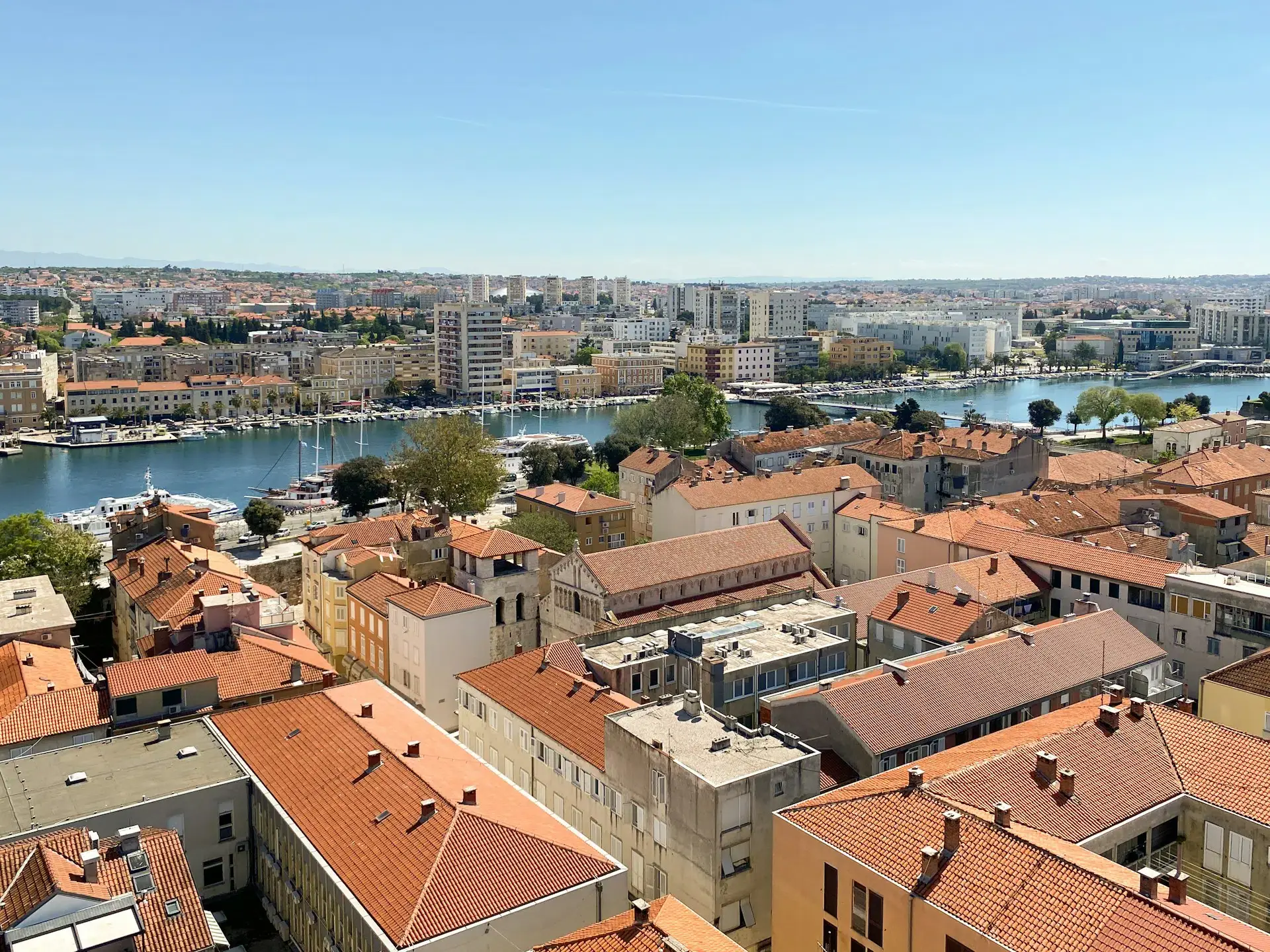
Zadar sits on a small peninsula of white stone, water on three sides. Along the quay, waves push air through the pipes of the Sea Organ and play chords under the steps, by day and by night. The rest is Roman and medieval, often in a single glance — the paving of the Roman Forum serves as the floor of the Church of St Donatus, a ninth-century rotunda built from the stones of the temple before it. The city kept its Venetian gates and ramparts from the centuries when it was the capital of Dalmatia. Offshore, islands run to the horizon: the bare limestone of Kornati National Park, the cliffs and salt lake of Telašćica Nature Park. The water is clear to the bottom, and people swim in the middle of town at Kolovare Beach. Inland, the waterfalls of Krka National Park drop through terraces of travertine. Grilled fish comes under local olive oil, and maraschino, the cherry liqueur, has been made here for two hundred years.
Travel score
The travel score throughout the year.
January
Very badFebruary
Very badMarch
BadApril
PoorMay
PoorJune
Very goodJuly
ExcellentAugust
GoodSeptember
GoodOctober
GoodNovember
BadDecember
Very badThings to do
Discover the best attractions in Zadar and its surroundings
Plitvice Lakes National Park
Sixteen terraced lakes linked by waterfalls built up by travertine barriers, among them the 78-metre Veliki Slap; the park was created in 1949 and has been on the World Heritage list since 1979. It is 87 kilometres from Zadar, entry is timed and booked online, swimming is forbidden and the boardwalks run one way.
Sea Organ
Marble steps on the waterfront hiding 35 tuned pipes, installed by architect Nikola Bašić in 2005, that turn the push and pull of the waves into held chords. The work won the European Prize for Urban Public Space in 2006; listening is free, day and night, at the tip of the peninsula.
Krka National Park
A run of seven falls on the Krka river, among them Skradinski Buk, 400 metres wide and followed by wooden walkways. Swimming is banned there, and allowed only at the park's designated sites; you enter by the river shuttle from Skradin or through the Lozovac gate.
Paklenica National Park
Two canyons cut into the Velebit range, with some 400 bolted climbing routes on the walls of Velika Paklenica and trails rising to the ridge huts. The Starigrad entrance is about 160 km north-west of Split on the A1 motorway; tickets are bought on arrival.
Telašćica Nature Park
A nature park around Telašćica bay at the southern tip of Dugi Otok: cliffs dropping more than 150 metres into the open sea on one side, the salt lake Mir cut off behind a strip of rock on the other. It is reached by boat trips from Zadar or by road from Sali, with an entry fee.
Church of St Donatus
A ninth-century pre-Romanesque rotunda built straight onto the Roman forum, reusing its columns and paving stones, still visible in the foundations. No longer a church, it serves as a concert hall prized for its acoustics during the summer Musical Evenings; entry costs a small fee.
Other destinations you might like
Nearby picks in the same theme
Some of the text on this page is generated using AI and may contain inaccuracies. Please check important details.Photos and ratings provided by Google Maps