Budapest
Om
Upptäck historien om Budapest
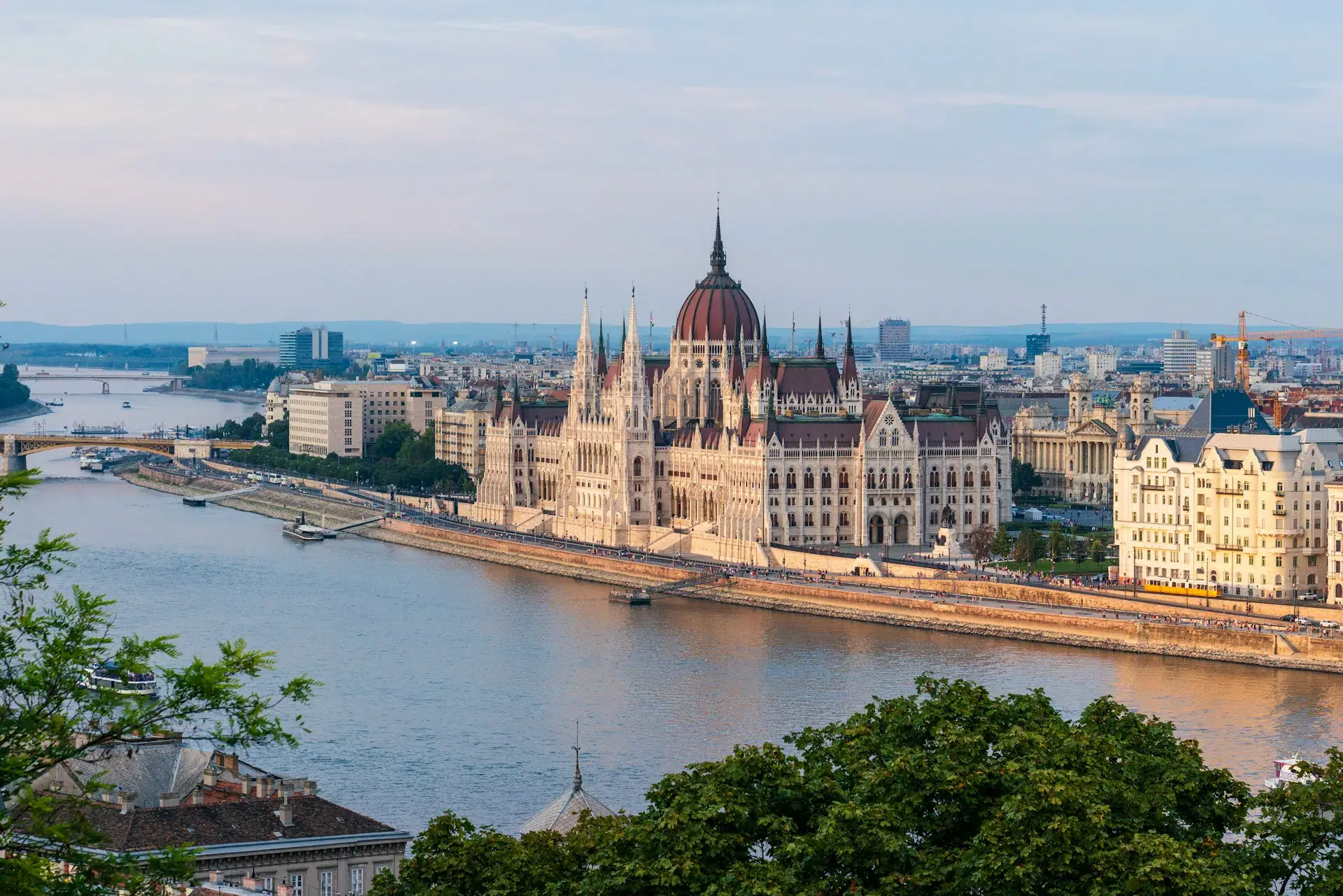
Budapest is cut in two by the Danube, and its lit bridges are the whole evening show. On the high bank, the white turrets of the Fisherman’s Bastion line up above the rooftops, with the city laid out below. Facing them, a vast neo-Gothic palace bristling with spires runs along the water, and the dome of St. Stephen’s Basilica marks the centre of the flat side. The city sits on hot springs: at the Széchenyi Thermal Bath, chess is played outdoors in steaming water below yellow palace walls. Grand old cafés still serve chocolate and cream under chandeliers, while the bars have taken over abandoned tenements. Beneath Andrássy Avenue runs the first underground railway on the continent, opened in 1896. The food is generous and red with paprika, the white wines are dry, and the island moored mid-river is nothing but lawns and fountains.
Resebetyg
Resebetyget året runt.
Januari
Mycket dåligFebruari
Mycket dåligMars
Mycket dåligApril
Mycket dåligMaj
OgynnsamtJuni
BraJuli
UtmärktAugusti
Mycket braSeptember
MåttligOktober
OgynnsamtNovember
Mycket dåligDecember
Mycket dåligAktiviteter
Upptäck de bästa attraktionerna i Budapest och dess omgivningar
Fisherman’s Bastion
A neo-Romanesque terrace built between 1895 and 1902 by Frigyes Schulek, its seven turrets standing for the seven Magyar tribes. The upper walkways are ticketed from April to October and free the rest of the year, and the terrace faces the Parliament across the Danube.
Heroes’ Square
A square laid out in 1896 for the thousandth anniversary of the Magyar conquest, around a 36-metre column topped by the archangel Gabriel and two colonnades of Hungarian rulers. It closes the vista of Andrássy Avenue and is served by metro line 1, with the Museum of Fine Arts alongside.
St. Stephen’s Basilica
Finished in 1905 after half a century of building work, the basilica carries a 96-metre dome — the exact height of the Parliament — and keeps the mummified right hand of King Stephen in a side chapel. A lift climbs to the panorama gallery, ticketed separately from the nave.
Buda Castle
The former royal palace, rebuilt after the siege of 1945, now holds the Hungarian National Gallery and the Budapest History Museum, each with its own ticket. The Sikló funicular climbs from the Chain Bridge and bus 16 reaches the courtyard; the terraced gardens on the Danube side are free to walk.
Széchenyi Chain Bridge
The first permanent bridge between Buda and Pest, opened in 1849 and guarded by four stone lions, it was blown up by the retreating German army in 1945 and rebuilt as it had been. It is crossed on foot, and the castle funicular starts on the Buda side, right at the end of the deck.
Hungarian Parliament Building
Built between 1885 and 1904 to Imre Steindl's design, it runs 268 metres of neo-Gothic frontage along the Danube and keeps the Hungarian Holy Crown beneath its dome. The interior is seen on guided tours only, on a dated ticket booked well ahead and collected with ID.
Andra destinationer du kanske gillar
Förslag i närheten inom samma tema
En del av texten på den här sidan är skapad med AI och kan innehålla felaktigheter. Kontrollera viktiga uppgifter.Foton och omdömen från Google Maps